
CHIBE Q&A with Dr. Emily Oster
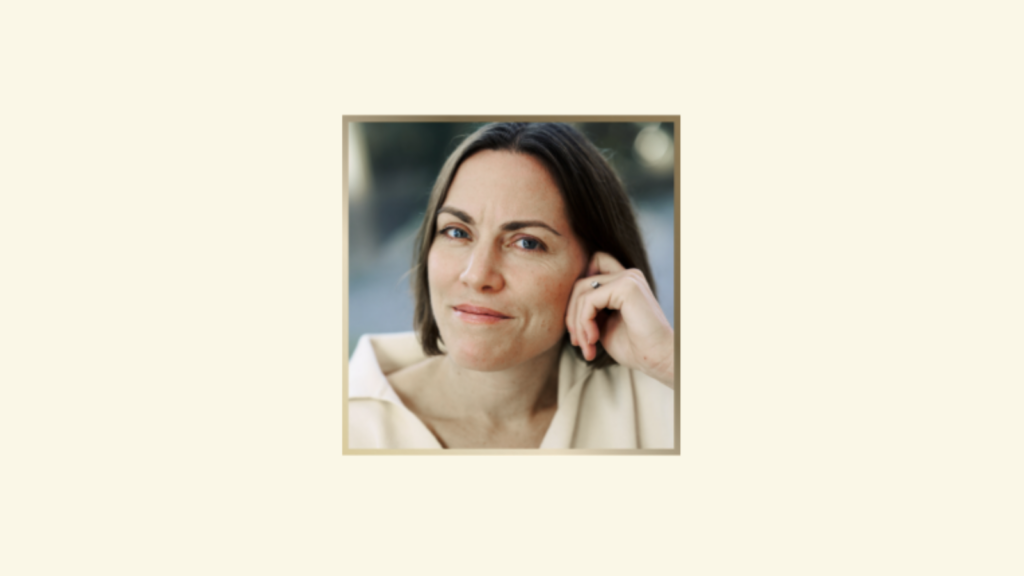
CHIBE and the Behavior Change for Good Initiative are hosting a keynote conversation with Dr. Emily Oster, professor of economics at Brown University, best-selling author, and founder of ParentData—on how to communicate scientific evidence clearly, responsibly, and effectively.
On January 28 at noon ET, Dr. Oster will be speaking with Drs. Katy Milkman and Alison Buttenheim about:
- best practices for communicating behavioral and health science to broad audiences
- navigating public debates around evidence
- balancing rigor with clarity when research informs real-world decisions
Learn more about the virtual event here and register here.
Ahead of the keynote, CHIBE spoke with Dr. Oster about behavioral biases, policy, and advice on dissemination.
Which behavioral biases do you think play the biggest part in parents’ decision-making in early childhood?
There are so many! Probably salience, especially around risk and small probabilities. I spend a lot of time trying to get parents to evaluate risks, and a core problem is that once people are thinking about a risk, they tend to overestimate it because it’s salient. So, people are a lot more afraid of, say, kidnapping than they are of car accidents. Even though the latter is much more likely.
My mental model of most people’s thinking about probabilities is that we as people are really good at understanding broad probabilistic categories – say, “always,” “sometimes,” and “never.” But once you learn that something has happened – even once – it goes from “never” to “sometimes.” And people are terrible at understanding that a 1 in 1,000 event is a lot less likely than a 1 in 100 event. They both seem unlikely but not impossible.
In the end, you have to do a lot of work to get people to think rationally about small risks.
If you could change the norms or policy around one parenting or childhood-related area, what would it be?
Policy is easy: if I could wave a wand, I would introduce federal paid family leave. The fact that we do not have this is phenomenally stupid and cruel, and I will never understand it.
If we are talking about softer norms, I’d like to see a return to norms of giving kids more freedom in the physical world. More walking to school, more trusting them to be on their own. This is much easier for parents to do if other parents are doing it, and it’s something which has changed a lot since my childhood – and I think not for the better.
Do you have any advice for our researchers in terms of sharing findings directly with the people who need it the most?
Educating a general audience about research is a related but different skill than producing research – it’s more similar to teaching, but even one more step removed. It’s a skill that takes time to develop and isn’t very widely rewarded in academia, so I well understand why most people aren’t going to want to do this. Which is okay! In a sense, it should be the job of those of us who are relatively better at this kind of translation to do this work.
But if people do want to get work out in a broader way, my main piece of advice is to move away from jargon and technical language. We use academic jargon a lot with each other, which makes sense because it’s a good shorthand and makes communication more efficient.
There is a temptation to use similar language when we talk to a broader audience, both because it’s how we generally communicate and because there is a sense that it makes one seem like an expert. In fact, using complicated jargon seems to mostly make people angry and confused, and then they don’t trust you. The ideas in our papers are generally not so complex that they cannot be explained simply. So…explain them simply, in non-technical language.