CHIBE hosts 15th annual Behavioral Science and Health Symposium
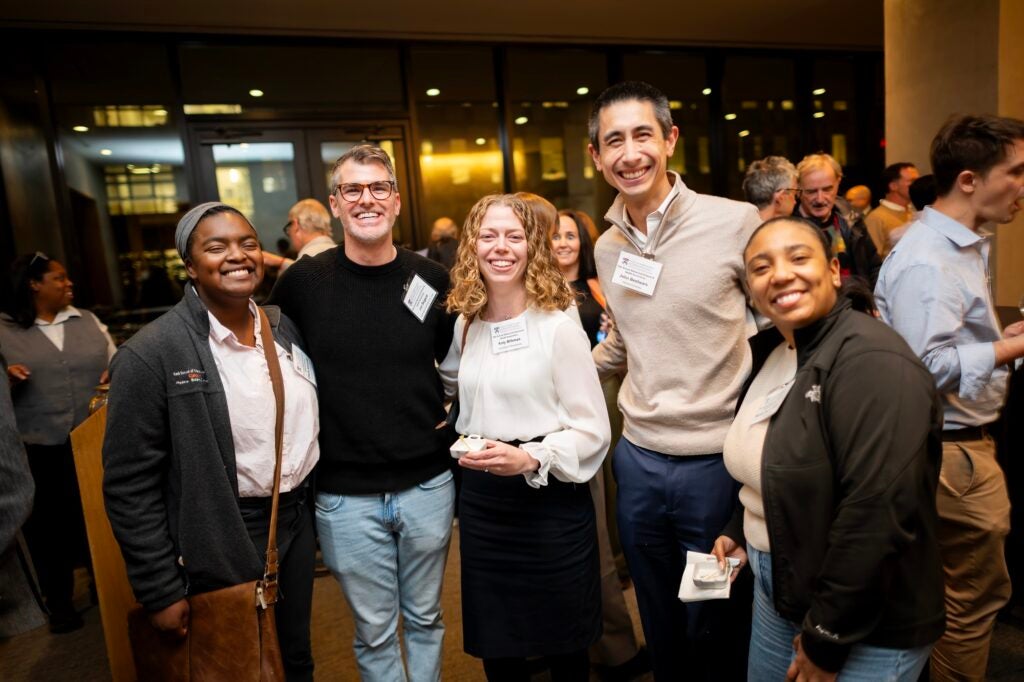
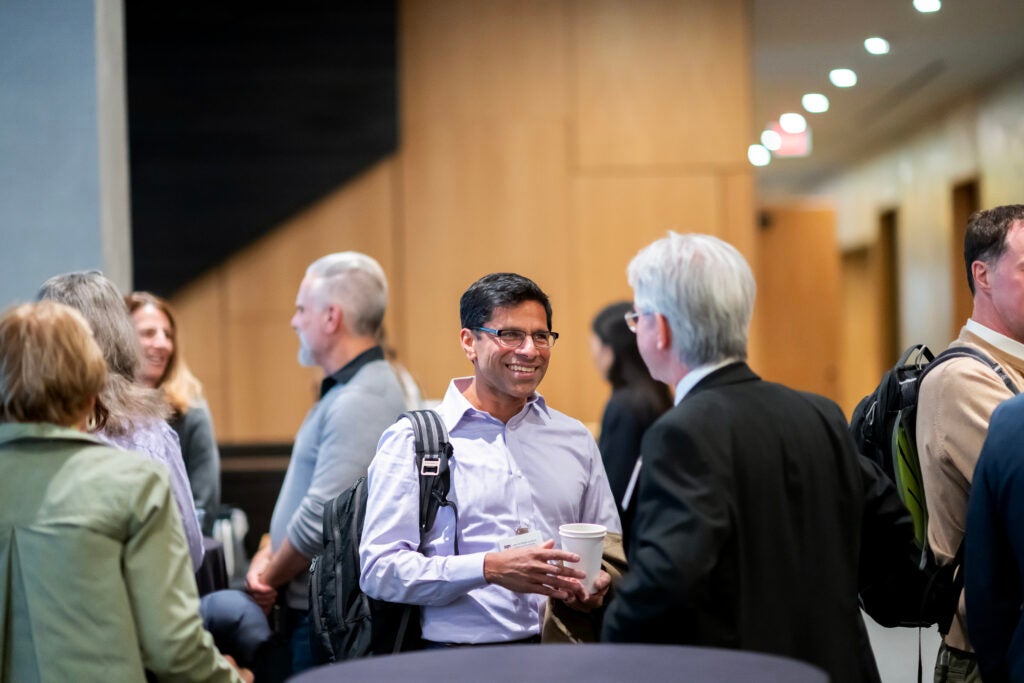
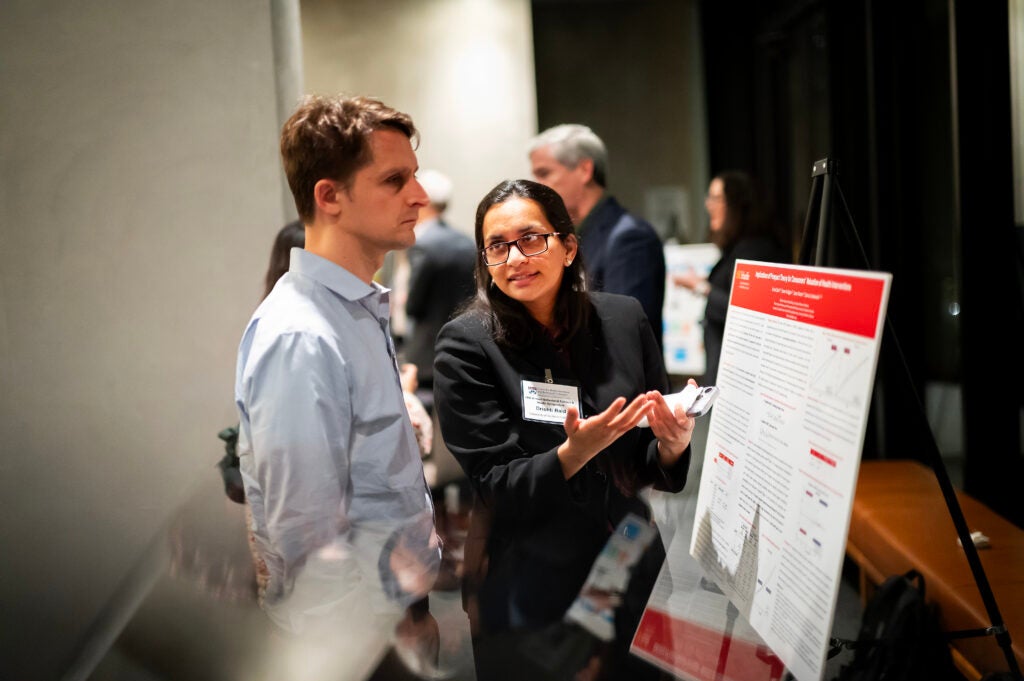
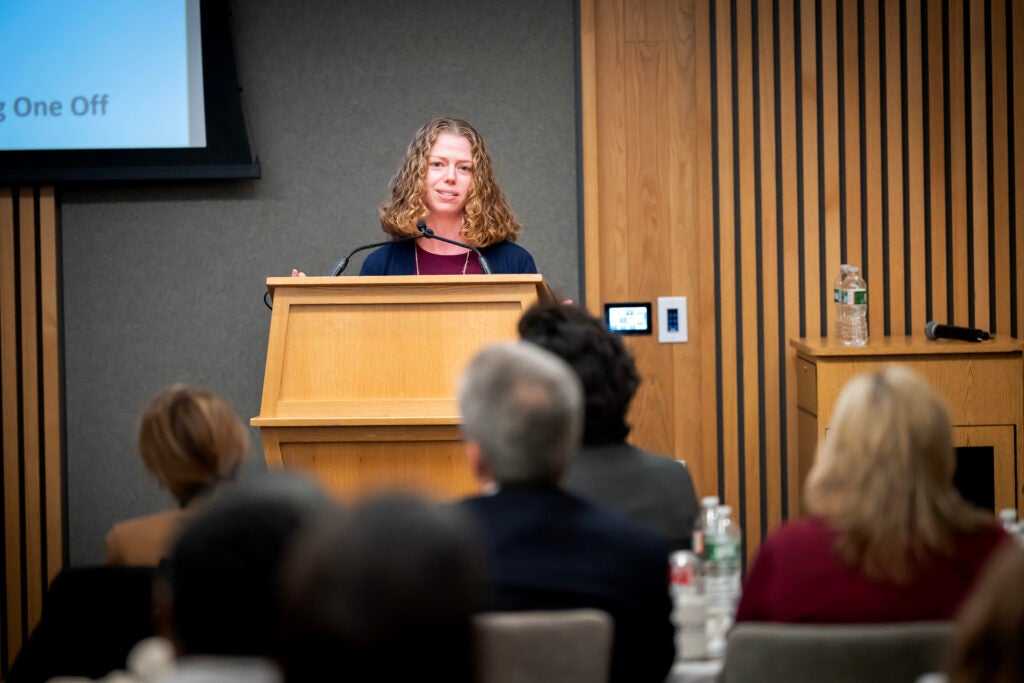
Economists, clinicians, scientists, and academics came together at Penn for CHIBE’s 15th annual symposium on behavioral science and health with stimulating conversations about AI, algorithms, ultra-processed foods, the NIH, smoking cessation, vaccine policy, and more.
CHIBE’s keynote speaker on the first day of the conference was NIH Director Dr. Jay Bhattacharya. CHIBE Director Dr. Kevin Volpp held a fireside chat with the 18th Director of the NIH for a conversation that spanned topics ranging from improving Americans’ life expectancy to the replication crisis to efforts to support junior investigators.

Remarks from Dr. Bhattacharya
On addressing the mismatch between the United States being 1st in spending and 46th in life expectancy:
Dr. Bhattacharya said that he is planning to reactivate funding of health economics research through the NIH, as there were curbs placed on this in 2010, which he associated with a reduction in the rate of improvement of life expectancy in the United States. Dr. Bhattacharya also emphasized the importance of research on vulnerable populations, in particular calling for more research that produces concrete ways to improve the health of those groups that are faring less well currently instead of simply describing differences in health between groups.
On what we should tackle next:
Dr. Bhattacharya talked about the frustrations around creating tremendous scientific knowledge that then hasn’t necessarily translated into better health for Americans. “Why is it that the advances we do have are so expensive? Why is it that scientists aren’t working on making those advances much less expensive?” He talked about sickle cell anemia in particular. “There is now a cure for sickle cell anemia. It’s an absolute miracle. [But the ways to cure it] cost $3 million dollars. If we had a $3,000 treatment like this, there would be no sickle cell anemia, no little kids suffering from pain crises,” he said.
On the replication crisis:
“I want to solve the replication crisis. I believe it’s a crisis not of fraud (although fraud is a symptom of it), but rather of incentives,” Dr. Bhattacharya said. He noted there are no incentives to replicate each others’ work, and there are no incentives to publish negative results. “If you’re a scientist now, if somebody comes to you to say, ‘I want to a replicate your paper,’ you’re going to view that as a threat. You’re going to say, ‘Oh my God, my reputation is at stake.’ But in fact, it’s actually a big honor, right? Because your work is of interest to other scientists in a serious way, and that’s a mark of honor, not a threat.”
On concerns around NIH funding and the future:
“The future actually looks very bright,” Dr. Bhattacharya said. “Members of both parties uniformly view the NIH as a tremendously productive investment.” However, a danger he sees in the future is if science is seen by the public as a political football where one side doesn’t see their needs or values reflected in NIH activities. “But for scientists, what I would say is that the future is very bright if they stay focused on what they do best, which is making discoveries about the physical world and in social science that translate over to better health.”
Remarks from Dr. John List:
Dr. John List, Kenneth C. Griffin Distinguished Service Professor in Economics at the University of Chicago, was the symposium’s second keynote speaker. Dr. List currently serves as Chief Economist at Walmart after previous stints as Chief Economist at Uber and at Lyft. He is also the author of The Voltage Effect: How to Make Good Ideas Great and Great Ideas Scale.
Dr. List spoke about leveraging private sector data to help inform major social challenges.

On how partnerships with firms can be key social and academic unlocks:
“I think that a major movement that will happen in economics and broader social sciences is that we will be using these partnerships a lot more. Within the next 5, 10, 15, 20 years, I think that will be one of the biggest landscape changes that we have,” he said.
On how we value our time and other learnings from Lyft:
Dr. List described large-scale field experiments with Lyft drivers that demonstrated our value of time is a little over $19 per hour. (He noted that the U.S. government values people’s time in more of the $9-$14 range.) “Now, what does this mean? The government is systematically undervaluing new ideas, new programs that save people time, whether it’s internet technologies, whether it’s bridges, whether it’s roads, you can use your imagination.” Dr. List said. Read the paper here.
Dr. List also noted that programs for consumers that are part of the Lyft experience like “wait and save,” “walk and save,” and “fast pass” were introduced following these experiments.
On how race affects citations and fines for speeding:
Dr. List described another of his most recent projects involving data from Lyft. The team was trying to determine whether police bias played a part in why racial and ethnic minority drivers are pulled over more for speeding and traffic violations. They found that there were no significant differences between white and minority drivers’ speeding behaviors and traffic violations, and yet police are up to 33% more likely to give speeding citations to minority drivers, and minority drivers pay 23% to 34% more in fines than white drivers traveling the same speed. Read the paper here.
On his current project:
Dr. List described his current project, called Project Gigaton, which is to reduce emissions and improve sustainability at Walmart. He is looking at Walmart’s “clean” suppliers and trying to transfer that technology to the “dirty” suppliers.
Closing Remarks from Dr. Katy Milkman:
Dr. Katy Milkman thanked the symposium organizing committee, the CHIBE event organizing team, and Dr. Volpp for their efforts to host the symposium. She also appreciated the constructive ideas shared during the event.
“This is the most community I have felt in the last year around thinking about solutions together and thinking about a way we can productively and proactively address what’s going on,” she said. “… I’m really grateful for having an avenue for that kind of conversation.”